About MikeWolfe

MikeWolfe has been a member since September 10th 2011, and has created 59 posts from scratch.

MikeWolfe's Bio

MikeWolfe's Websites

This Author's Website is

MikeWolfe's Recent Articles

What Is Massage Therapy

massage therapy

What is Massage Therapy -

(Massage Therapy Information)

Massage Therapy Scope of Practice

Massage Therapy practice is the assessment of the soft tissue and joints of the body and the treatment and prevention of physical dysfunction and pain of the soft tissue and joints by manipulation to develop, maintain, rehabilitate or augment physical function, or relieve pain.
(Massage Therapy Act, 1991).

Right now in Canada, British Columbia, Ontario and Newfoundland/Labrador are the only provinces with education requirements and regulation overseeing massage therapists.

Only members of the College of Massage Therapists of British Columbia, Newfoundland / Labrador and Ontario are permitted to use the title Massage Therapist or Registered Massage Therapist and use the letters MT or RMT with their names.

Massage therapists have completed a 2-3 years diploma program from a recognized massage therapy school. Massage therapists participate in a Quality Assurance Program that assists them in the maintenance of high professional standards and quality care of their clients.

Massage therapists use long, smooth strokes, kneading and other movements focused on superficial layers of muscle using a massage oil, gel or lotion.

Interested in learning techniques for massage therapy to give at home? Then download your complimentary copy of Your Healing Hands for visiting our site.

About Massage Therapy – How Does It Work For You?

Massage therapists use series of different strokes on your body using a massage oil, gel or lotion. For example long smooth strokes, circular motion and other movements focus on layers closest to the surface of muscle and soft tissue.

Massage therapy improves circulation by bringing oxygen and other nutrients to body tissues.

It relieves muscle tension and pain, increases flexibility and mobility and helps to decrease ppain and stiffness in muscles and joints.

For a massage therapy treatment to be effective the massage therapist must have a good understanding of both the body and the feelings of the client.

Why Would You Get Massage Therapy?

You receive massage therapy for relaxation or treatment for a variety of health conditions:

• Back pain
• Inflammatory conditions such as arthritis and tendinitis
• Stress relief and stress-related conditions
• Headaches and migraines
• Muscle and related conditions such as spasms, strains and sprains
• Repetitive strain injury, such as carpal tunnel syndrome
• Circulatory and respiratory problems
• Post-injury and post surgical rehabilitation

Massage therapy and stress relief usually go hand in hand. It is your opportunity to let go any depressing or negative feelings as you now out of a stressful environment. This time period when you on the treatment table allows you to relax. This may decreases the level of your stress hormone cortisol.

Massage therapy  also appears to enhance immune function.

What a Typical Massage Therapy Session is Like

A typical massage therapy session is between 40 and 90 minutes. Your massage will begin with a brief consultation and review of symptoms, medical history, and lifestyle.

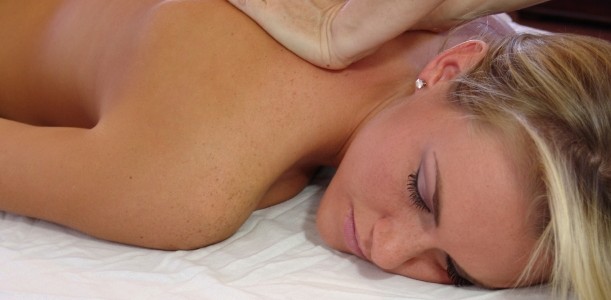
You will be asked to undress (many people keep their underwear on) while the massage therapist is out of the room, and lie face down under a sheet on a padded massage table.

The massage therapist will knock on the door to make sure you are ready. The massage therapist re-enters the room and will then adjust the face rest and pillows to ensure that you are comfortable and properly positioned. Tell the massage therapist if you are too warm or cold.

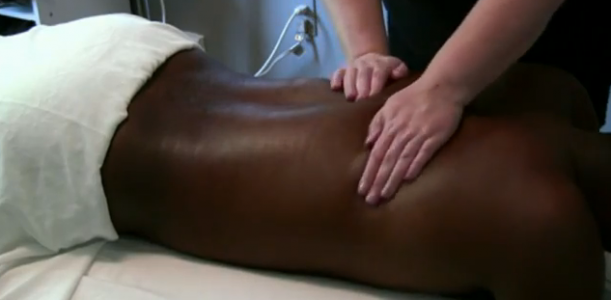
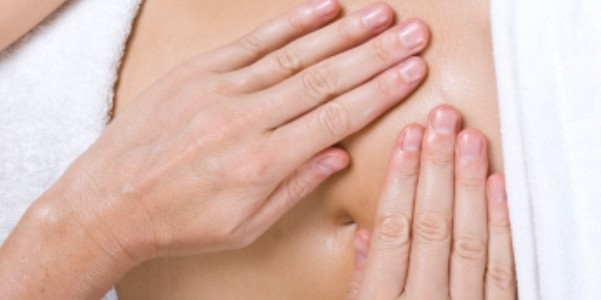
The massage therapist uses a light oil or lotion on the skin and begins the massage. A full body massage usually begins on the back and then moves down to the legs. You will then be asked to turn over so you are face up. The massage continues on your arms, legs, neck, and abdomen.

You are underneath the sheet at all times, and in North America, only the part of the body being treated at any one time is uncovered.
After the massage, the massage therapist leaves the room so you can get changed.

Take your time getting up. If you sit or stand too quickly you may feel lightheaded or dizzy.

Will Massage Therapy Hurt?

Massage therapy  shouldn’t hurt. Occasionally there is mild aching when the massage therapist applies pressure over “knots” and other areas of muscle tension. If the pressure is too strong for you, let the massage therapist know.

How Will I Feel After a Massage?

Most people feel calm and relaxed after a treatment. Occasionally, people experience mild temporary aching for a day.

Precautions
Massage therapy is not recommended for certain people:

• People with infectious skin disease, rash, or open wounds
• Immediately after surgery
• Immediately after chemotherapy or radiation, unless recommended by your doctor
• People prone to blood clots. There is a risk of blood clots being dislodged. If you have heart disease, check with your doctor before having a massage
• Pregnant women should check with their doctor first if they are considering getting a massage.

Massage in pregnant women should be done by massage therapists who are certified in pregnancy massage.

Massage should not be done directly over bruises, inflamed skin, unhealed wounds, tumors, abdominal hernia, or areas of recent fractures.

Additional Massage Therapy Treatment Tips

• Don’t eat a heavy meal before the massage.
• If it’s your first time at the clinic or spa, arrive at least 10 minutes early to complete the necessary forms. Otherwise, arrive 5 minutes early so you can have a few minutes to rest and relax before starting the massage.

Massage Therapy How to Find A Registered Massage Therapist

Fortunately there are many different directories and you all you need to do is find your local directly. The College of Massage Therapist of Ontario has a list of all active massage therapists.


Massage Therapy – Learn to Give a Massage


Mobile Massage – A New Beginning

Mobile MassageMobile Massage Therapy – by Brianne -McFarlane RMT

Becoming a Registered Massage Therapist had been a dream of mine for quite some time. But long before massage ever entered my mind, I was just a kid who loved to dance. I grew up in the ballet and dance world, and even when I stopped dancing, I wanted nothing more than to find a way to keep this passion of mine in my life.

As life does, it went on, and I was soon a Marketing student at College. After graduating, I worked for many years in the marketing industry, but I knew it wasn’t exactly what I wanted to do for the rest of my life. Massage therapy had soon begun to nag me once again from the back of my mind.

So, in January 2011, I finally put my plan of becoming a Registered Massage Therapist into action by enrolling at Elmcrest College. While in school, I had a clear vision as to how I saw my future career. I wanted nothing more than to concentrate on sports massage, and somehow incorporate the dance world.

After I became registered, I wasn’t sure how to put my plan in place, and with so many avenues this industry offers, I became unsure which route I wanted to take. So putting the dance route on the back-burner, I started applying to clinics right away.

Mobile Massage – No More Waiting!

I soon found myself getting anxious, not wanting to wait for someone to decide if I should work for them or not. So, literally, overnight I started my own mobile massage therapy  business. I created a website through the RMTAO, and utilized social media to get the word out about my business. I started out going to friend’s houses and it soon grew from there. Having a mobile company gives me the freedom to work when I want, and where I want.

While this is a great way to start out in the industry, you do have to be careful. I don’t go to anyone’s house that I don’t know. All my clients come from referrals of people I know and trust.

Shortly after I started my own mobile business, I received an email from two women who were also in the process of starting their own mobile massage company, and they were looking to hire an RMT.

After meeting with them, I was hooked. They both have daughters in dance, and saw the need for massage therapy at the endless competitions they attended. The company is called Revive, Renew, Restore Massage Therapy Inc. We go to a different dance competition every weekend, and provide pre and post competition treatment, as well as relaxation massage for the parents. I never thought mobile massage was where I would find myself, but I have never been happier, and wouldn’t change a thing.

I’m new to the industry, and I know there are a thousand different paths this career can lead me, but I am perfectly happy being on the path, that I once dreamt of, but never thought was possible.

—————————————-

Mobile Massage with BrianneBrianne McFarlane graduated from Elmcrest College in 2012
from a fast-rack 18 month course.
She currently works for Revive, Renew, Restore Massage Therapy Inc. a new mobile massage company.

For more information about Brianne please visit her website at
http://www.massagezone.biz/briannemcfarlane-rmt/


Benefits of Myofasical Release | benefits of myofascial release

Benefits of Myofascial Release

Unscripted – This was live at 9pm Monday January 22, 2013.
There is some static. Enjoy!

Indian Head Massage

Indian Head Massage - Laurie J EnglishHeed the Call: Indian Head Massage

Laurie J. English, LMT, LCICI, NCBTMB

I was taking stock. What massage class to take next? Despite the mandatory state massage board CEU requirements, I wanted to experience something decadently different. What course would catapult my massage to the next level?  After months of evaluation, I realized that, hands-down, almost everybody loves a head massage.

Despite this epiphany, even after 10+ years as a professional massage therapist, I hadn’t really had any inspired head massage training. The head quickly became this potent reservoir of wow-power in my mind for my future clients.

 I was smitten. It commenced innocently enough. The goal: a few stellar techniques to augment my table massage. So, I took an Indian Head Massage class. I discovered that the “head” in Indian Head Massage really referred to the back, the shoulders, the neck, and the arms. Yes, Indian Head Massage is actually a complete upper body treatment. Done traditionally, certain men practiced it through the barbering profession.

 Most women used it at home for grooming and beautification. Although I learned a systematized technique called Champissage, I felt like Alice in the proverbial wonderland.

 I knew there was something more than the soothing spa experience that I’d been led to fashioning it into. The trail of mystery beckoned. And so, I journeyed to India.In India, my experience of head massage was a wild ride.

The environment of India has erupted, bringing forth a specific style of head massage that mirrors the chattering monkeys, honking horns, and throngs of people that call it home.

Indian head massage is typically short. Five to ten minutes of invigorating upper body massage where you’ll find yourself being rubbed, beaten, slathered, spritzed, snapped and pummeled.

And, usually, you’ll pay you’re money gladly and come back repeatedly for more. It’s true, I had some head massages that I care not to remember. In fact, my scalp burned like fire after one of them so much that I couldn’t have it touched for three days from the inflammation.

Despite my few experiences of head-massage-gone-wrong though, I was addicted by the thought — and the feel — of it. How to capture the thrill of head massage and transport it back with me across the Atlantic Ocean to my home in New Mexico?I set up shop. Shop, at that time, was the front of the Ayurvedic-inspired Annapurna Restaurant in Santa Fe.

There you’d find me doing head massages while the pungent aroma of turmeric and chai permeated the ether’s. On the weekends, I did eight to ten hour events on the unsuspecting public, growing both my love and theirs for Indian head massage.

Shortly, I had a waiting list of clients. After almost two years of this, I came to various understandings about head massage, and the head, in particular.

Each head comprises a universe unto its own. There is no one-size fits all series of movements nor is there a standard amount of pressure, for instance, that will work for every head every time. There is no magic head massage bullet. However, upon applying the first two or three Indian head massage techniques you can get a good gauge for what will work for the particular head in question.

Indian head massage techniques, as I’ve written more about here (http://www.champiusa.com/student-resources/champi-indian-head-massage-articles), can be thought of in yin and yang terms. Unlike Swedish massage which veers more on the relaxing, Indian head massage is a teeter-totter balancing act of extremes.

Is Indian head massage the Dr. Jekyll and Mr. Hyde of the massage world? Yes. Soothing massage techniques are almost always followed by vigorous percussive and/or friction techniques. The body enjoys this. The muscles benefit.

To put the wonders of Indian Head Massage in a developmental framework, consider this quote from Jean Liedloff, author of The Continuum Concept:

 “The fact that babies actively encourage people to treat them to excitement is indication that they expect and require action upon which to develop. A mother sitting still will condition a baby to think of life as dull and slow and there will be a restlessness in him and frequent promptings from him to encourage more stimulation. He will bounce up and down to show what he wants, or wave his arms to initiate a faster pace in her actions. Similarly, if she insists upon treating him as though he were fragile, she will suggest to him that he is. But if she handles him in a rough and off-hand way, he will think of himself as strong, adaptable, and at home in a vast variety of circumstances.  Feeling fragile is not only unpleasant but interferes with the efficiency of the developing child and later of the adult.”

The thrill and excitement of Indian Head Massage are natural wonders. Over the years,  I’ve incorporated more and more of this feeling of adventure into my table massage as well. Not only is it liberating as a therapist to provide a full spectrum of experience, but I witness my clients craving this knowing of themselves as “strong, adaptable and at home in a vast variety of circumstances.”

If you’re looking to experience this full spectrum of feeling yourself or perhaps even offer this unique wow-factor to your clients, consider heeding the call to adventure found in Indian head massage.

——————————————-

Laurie J. English, LMT, RPP, LCICI, NCBMT, is a national trainer of Indian Head Massage. She has created numerous head massage classes including ChampiMassage, Mini-Samadhi, and Elemental Head Massage. She offers private sessions in Santa Fe, New Mexico and can be reached at 505.490.0591 or laurie@spanomad.com. She is the founder of SpaNomad: Traveling Spa and Massage Training and ChampiUsa.

—————————————–

If you’ve enjoyed this post I’ve made it easy so you can comment and share this post with your friends on Indian Head Massage.


Orthopedic Massage vs. Medical Massage

orthopedic massage- russian medical massage

Orthopedic Massage vs. Medical Massage Is There a Difference?

Having been a massage therapist now for over 12 years I tend to question terminology given to types of therapy that are just modified versions of original techniques.

So in the process of seeking information on different courses to take for CEU’s I came across orthopedic massage and medical massage (Russian Medical Massage). With the research I did this is what I came up with.

Orthopedic Massage

According to an article in Massage Today here is a definition of Orthopedic Massage

Orthopedic massage is a type of massage therapy which is focused on treating painful conditions which affect the soft tissues of the body. The massage therapist may integrate a range of techniques to treat these conditions, ideally adapting his or her style for each client, as every person’s body is slightly different.

Orthopedic massage may be recommended by a physician who wants a patient to pursue multiple treatment modalities, and people can also see an orthopedic massage therapist independently. Training in orthopedic massage is offered by several massage schools. (http://www.massagetoday.com/archives/2004/02/03.html)

So when I read this definition about orthopedic massage  I couldn’t help but think that this no different than what I had been taught when I was in school for massage therapy. Therapeutic massage by another name

Moreover, the description continued as follows : “a therapist who performs orthopedic massage focuses on problems with the client’s musculo-skeletal system. He or she may release tight muscles, help to stretch shortened muscles and tendons, and decompress joints.

The goal is to normalize the soft tissues of the body, both to treat specific conditions and to keep clients generally healthy and fit. Because orthopedic massage is designed to treat medical conditions, it requires extensive training, as an unskilled therapist could harm a client by accident.”

Then I thought to myself, how is this definition of orthopedic massage different when compared to the definition of massage therapy according the Massage Therapy Act, 1991

The description continues indicating that an assessment is performed followed by  a treatment plan.

Again, how is this different from what I was taught in school? We took a clinical assessment, pathological treatment and a remedial exercise / rehab course…


Medical Massage

(Russian Medical Massage)

According to Wikipedia Medical Massage “is outcome-based massage, primarily the application of a specific treatment targeted to the specific problem(s) the patient presents with a diagnosis and are administered after a thorough assessment/evaluation by the medical massage therapist with specific outcomes being the basis for treatment.

Again with this definition I do not see how it is different from the definition of Massage Therapy according the Massage Therapy Act of 1991:

“Massage Therapy practice is the assessment of the soft tissue and joints of the body and the treatment and prevention of physical dysfunction and pain of the soft tissue and joints by manipulation to develop, maintain, rehabilitate or augment physical function, or relieve pain.”

The only difference being that as massage therapists we do not “diagnose”: however, we do have an index of suspicion of what the issue is.

If you look at both definitions, orthopedic massage and medical massage, they are practically identical. Is there truly a difference? And how are they different than the practice of massage therapy.

To me the differences lie in where you get your training in massage therapy.

In Canada, British Columbia, Ontario and Newfoundland/Labrador are the only provinces with education requirements and regulation overseeing massage therapists.

Only members of the College of Massage Therapists of British Columbia, Newfoundland / Labrador and Ontario are permitted to use the title Massage Therapist or Registered Massage Therapist and use the letters MT or RMT with their names.

Massage therapists have completed a 2-3 years diploma program from a recognized massage therapy school. Massage therapists participate in a Quality Assurance Program that assists them in the maintenance of high professional standards and quality care of their clients.

These courses are usually 2000-2200 hours in length. This is different from training in other parts of the world where there is no provincial or national regulation or registration. In some countries you need only to complete a 500 hundred hour course.

As you can see from this information, there is little difference between orthopedic massage and medical massage.

Buyers beware and do your due diligence in researching the type of massage  you wish to have.  Does your therapist perform orthopedic massage or medical massage or more importantly what courses have they taken and do you feel comfortable with them?

“Have they taken Medical Massage Training?”

Choosing Your Massage Therapist

Choosing your Massage Therapist

choosing your massage therapist

Choosing Your Massage Therapist – 7 Things To Keep In Mind

Suffering from stiff and aching muscles? Looking for a natural way to relax and unwind? Perhaps it is time for you to get a massage -:)

But who who to go to and who do you trust? Listen if you haven’t had a massage before these just might be a few things that are running through your head.

With that in mind here are 7 Steps for Choosing Your Massage Therapist

In no particular order they are:

1.  Go to the yellow pages or Internet to look for registered/licensed  massage therapists in your town or city. The key here is to locate 3-5  masasge therapy providers close to you. The other option would be to look for someone close to where you work. Massage therapist certification or registration is what you look for first because you want to know that they have gone through a provincial or state regulatory exeamination of basic levle competency.

You want to feel comfortable with your choice, so pick up the phone and speak to the massage therapist or receptionist to get a feel. You need to be comfortable.

Perhaps you want to book a fifteen minute chair massage to assess your massage therapist. If you are shy about your body, the treatment may be done with you fully clothed. It is important for you to know that all registered or licensed massage therapists are bound by a professional code of conduct and regulations.

Furthermore when choosing your massage therapist make sure he or she is registered or licensed with their regional, provincial /state or national regulating / governing body. This mean that they have passed a set of standard exams.

To be quite honest a full hour is most beneficial.

2.  What other credentials or experience do they have along with their registration or licensing. Many massage therapists specialize in certain aspects of massage therapy. For example some massage therapists work with sports injuries, lumpectomy (partial breast tissue removal), chronic neck and back pain or general relaxation.

While choosing your massage therapist, think abut giving a student intern at a massage therapy school a chance. I have received some amazing massages from students ! This is another way to go and it is a lot less expensive!

3. Perhaps you have been treated by a physiotherapist, athletic therapist or chiropractor. If so, I’m sure they have someone they could refer you to. It is quite possible that they might even be in the same clinic. If this is the case this is a great opportunity to have a brief chat with them to discover if there is a connection between the two of you. Even your family physician may have someone they refer to.

4.  Referral from friends is another way to help with choosing your registered massage therapist. Two friends may recommend the same or two different massage therapists. It all depends on what you are looking for. Massage therapists specialities range from general relaxation to lymphatic drainage to sports injury rehab to motor vehicle accident (MVA) treatments.


5. Use an online massage locator’s system  at the major massage associations websites in Canada – CMTO.com, RMTAO.com or the USA ABMP , AMTA or IMA listed in the resources section.

6. When choosing your massage therapist try to figure out what you need.  Is it relaxation, relief from pain, an injury or disease, injury prevention work, athletic performance enhancement? If you’ve got a specific concern (burn victim, trouble breathing when reclining, extra large body, skin issues, HIV) tell your potential massage therapist when talking with her or him on the phone. If you feel that they’re resisting the thought of touching you, go elsewhere.

7.  In choosing your massage therapist you may want to inquire about home massage. Some massage therapists have mobile offices and treat ontly 2-3 a day. They make house calls. That being said it is important you know that may charge you extra and include a gas fee .

Choosing Your Massage Therapist – Other Things to Consider

After you have had your first massage decide whether or not you want to experience someone else or just stay with that therapist.

It is important to develop a working relationship with a massage therapist and it may take a few sessions to get an idea of what their work is really like.

At one point in time massage therapists were mainly female. As time has passed more males are entering the field. Now it is not uncommon to see male massage therapists in their own private clinics.

Also, in choosing your massage therapist, will it matter to you if they practice out of an office or their home. Many massage therapists have designated areas in their homes specifically for massage.

Massage therapist training is different from country to country so keep this mind when you are choosing your massage therapist. Some programs are as long as 2000 hours while others are only 500.

Even though there are many “types of massage therapy”, sensual massage therapy is not one provided by licensed, certified or registered massage therapists. Buyer beware!

Choosing your massage therapist may be a simple process if you know what you are looking for.

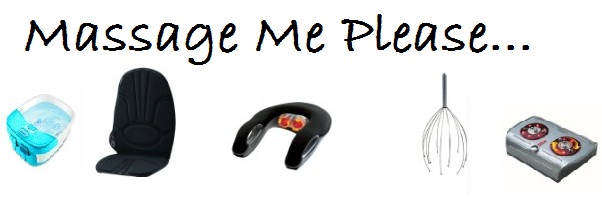
Instead of choosing your massage therapist you may want to look into getting your own massagers.

——————————————————————————————————————

Article courtesy Mike Grafstein B.Ph.Ed, CAT(C), SMT(C)